Choosing the right countertop material sets the foundation for your kitchen’s functionality and appearance. When kitchen countertop materials compared side-by-side, each offers distinct advantages in durability, maintenance requirements, cost, and visual appeal. Understanding these differences helps you select a surface that matches your cooking habits, design preferences, and long-term value goals.
Why Your Countertop Choice Matters More Than You Think
Countertops occupy the hardest-working real estate in your kitchen. They endure hot pots, knife cuts, acidic spills, and daily cleaning. A poor material choice leads to stains, scratches, and costly replacements within just a few years. The right surface, however, maintains its beauty and function for decades while supporting your home’s resale value.
Material selection influences more than appearance. It determines how much time you spend on maintenance, whether you can place a hot pan directly from the stove, and if wine or lemon juice will leave permanent marks. These practical considerations shape your daily kitchen experience in ways that color and pattern never will.
How Material Performance Shapes Daily Kitchen Life
Different materials respond differently to heat, moisture, and impact. Some require annual sealing while others need only soap and water. Some tolerate direct knife contact while others show scratches from routine use. Matching material properties to your household habits prevents frustration and preserves your investment.
Families who cook frequently need surfaces that forgive heavy use. Those who entertain often prioritize visual impact and stain resistance. Understanding your primary use case narrows the field before you consider aesthetics or budget.
Granite Countertops: Natural Stone With Proven Durability
Granite remains popular because it delivers genuine stone beauty with exceptional hardness. Each slab features unique patterns and color variations created over millions of years. The material resists heat well enough that you can place hot pans directly on the surface without damage in most cases.
Granite requires sealing once or twice per year to prevent stains from oils and acidic liquids. The sealing process takes about 30 minutes and uses products available at any hardware store. Sealed granite resists most stains, but prolonged exposure to red wine or citrus can still cause discoloration if not wiped quickly.
Expect granite to cost between $40 and $100 per square foot installed, depending on rarity and origin. Exotic colors with dramatic veining command premium prices, while earth tones with moderate patterns offer better value. The material’s weight requires professional installation and strong cabinet support.
Quartz Surfaces: Engineered Performance and Consistency
Quartz countertops combine crushed natural quartz with polymer resins to create an engineered stone that outperforms natural materials in several categories. The manufacturing process produces consistent patterns and colors across slabs, making it easier to match seams and plan layouts.
Unlike granite, quartz never requires sealing because the resin binds the surface completely. This makes it highly resistant to stains from coffee, wine, and oil. The material resists bacteria growth better than porous natural stone, which appeals to households focused on food safety.
Quartz cannot tolerate direct heat above 300 degrees. Placing a hot skillet or pot directly on the surface can cause discoloration or cracking. Always use trivets or hot pads. The material also costs slightly more than mid-range granite, typically $50 to $120 per square foot installed, with designer collections reaching $150.
Marble Countertops: Timeless Elegance With Trade-Offs
Marble delivers unmatched visual sophistication with soft veining and luminous depth. It remains the preferred choice for baking enthusiasts because the cool, smooth surface is ideal for rolling pastry dough. High-end homes often feature marble in butler’s pantries and wet bars where the aesthetic impact justifies the maintenance.
The material etches easily from acidic substances like lemon juice, vinegar, and tomato sauce. These reactions dull the polished finish and create permanent marks that only professional refinishing can remove. Marble also stains readily from oils and wine unless sealed frequently and wiped immediately after spills.
Consider marble only if you accept the patina it develops over time or commit to meticulous care. Some homeowners embrace the lived-in character that etches and stains create, viewing them as part of the material’s charm. Others find the maintenance burden outweighs the beauty. Pricing ranges from $50 to $200 per square foot installed depending on quality and rarity.
Butcher Block: Warmth and Function for Work Zones
Wood countertops bring organic warmth and a forgiving work surface that’s gentle on knives and dropped dishes. Maple, walnut, and cherry rank as the most popular species for their durability and grain patterns. Butcher block costs $40 to $100 per square foot installed, making it competitive with natural stone.
Wood requires monthly oiling with food-safe mineral oil to prevent drying and cracking. The surface scratches and dents easily, but you can sand and refinish it multiple times over its lifespan. This renewable quality makes wood one of the most sustainable countertop options.
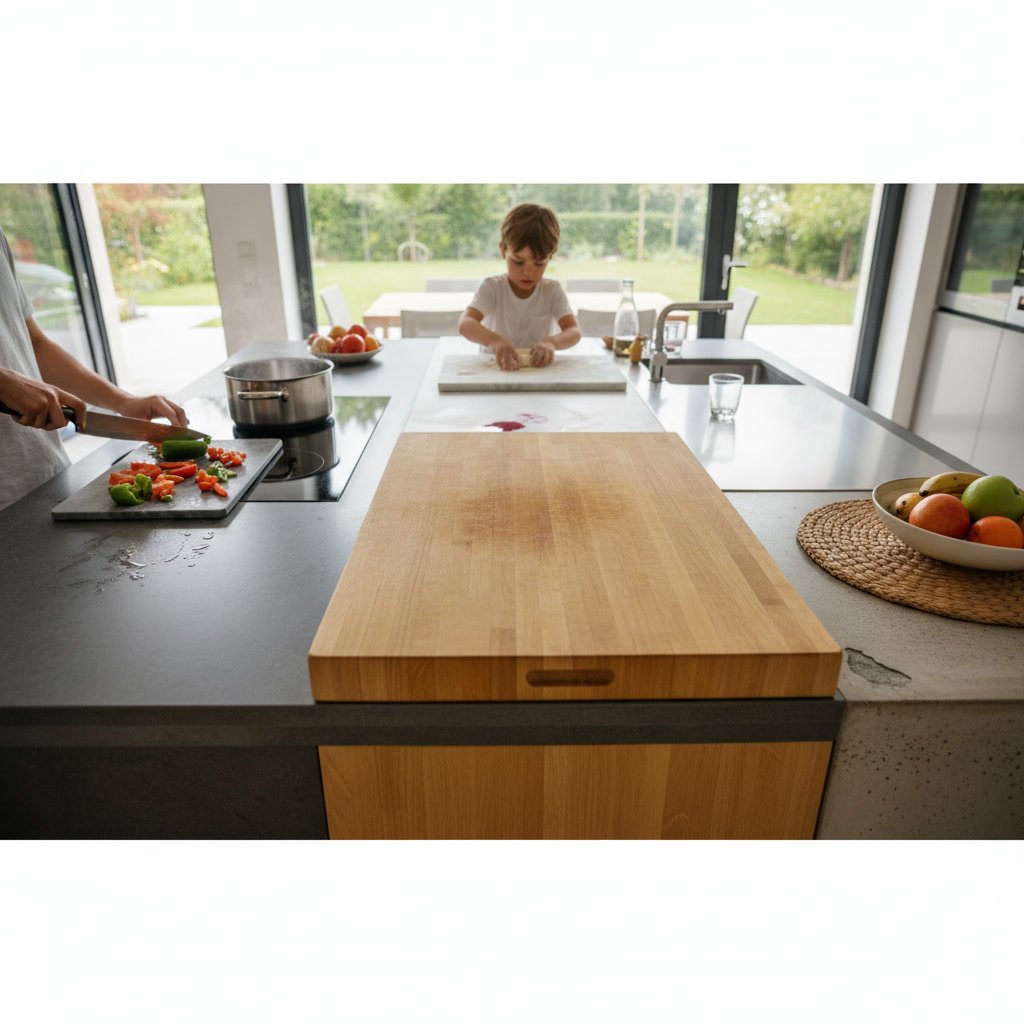
Water damage poses the biggest risk. Standing water causes swelling, warping, and dark stains. Wipe spills immediately and never install butcher block adjacent to sinks without proper sealing. Many homeowners use wood for island tops or specific work zones rather than perimeter counters to limit water exposure.
Laminate Surfaces: Budget-Friendly Versatility
Modern laminate has evolved far beyond the dated patterns many associate with 1980s kitchens. Today’s products mimic natural stone, wood, and concrete with convincing realism at a fraction of the cost. Installation runs $20 to $50 per square foot, making laminate the most accessible option for full kitchen remodels on limited budgets.
Laminate resists stains well but shows damage from heat and sharp impacts. Hot pans leave permanent marks, and cutting directly on the surface dulls knives while potentially cutting through the decorative layer. Once damaged, laminate cannot be repaired and requires full replacement.
The seams in laminate installations remain visible, especially on long runs. Skilled fabricators minimize their appearance, but the joints will always show more than stone or solid surface materials. Despite these limitations, laminate delivers excellent value for rental properties, starter homes, and kitchens where budget constraints outweigh longevity concerns.
Solid Surface Materials: Seamless and Repairable
Solid surface products like Corian offer a middle ground between laminate and stone. The material runs consistently through the entire thickness, allowing fabricators to create invisible seams and integrated sinks. Scratches and minor damage can be sanded out, making solid surface more repairable than most alternatives.
Heat resistance falls below granite and quartz but exceeds laminate. Use trivets for pots above 300 degrees. The material resists most stains when cleaned promptly but can show wear in high-traffic areas over time. Prices range from $40 to $80 per square foot installed.
Comparing Durability, Maintenance, and Cost in Middlesex Homes
Homeowners across Middlesex and surrounding Connecticut counties weigh these factors differently based on household composition and cooking habits. A household with young children might prioritize stain resistance and low maintenance, pointing toward quartz. A couple who bakes weekly might accept marble’s demands for the functional benefits it provides.
Cost comparisons must account for lifespan and maintenance. Granite and quartz both last 20-plus years with minimal upkeep, while laminate typically needs replacement after 10 to 15 years. The higher initial investment in stone often proves more economical over the long term. Professional guidance during the design phase helps align material selection with budget realities and performance expectations.
Matching Countertop Materials to Design Styles
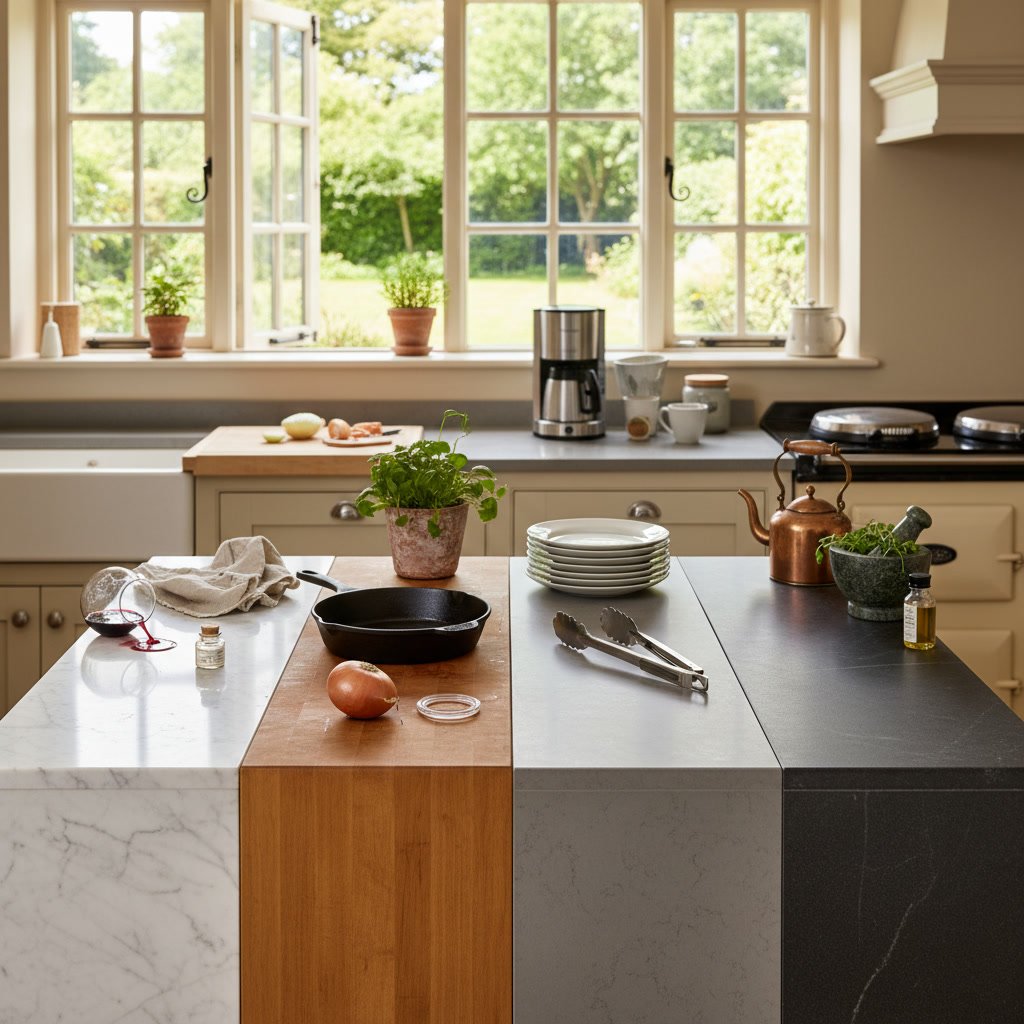
Material choice reinforces your kitchen’s overall aesthetic. Polished marble suits traditional and transitional designs with its classic elegance. Honed granite or matte quartz complements contemporary spaces with clean lines. Butcher block anchors farmhouse and cottage styles with rustic character.
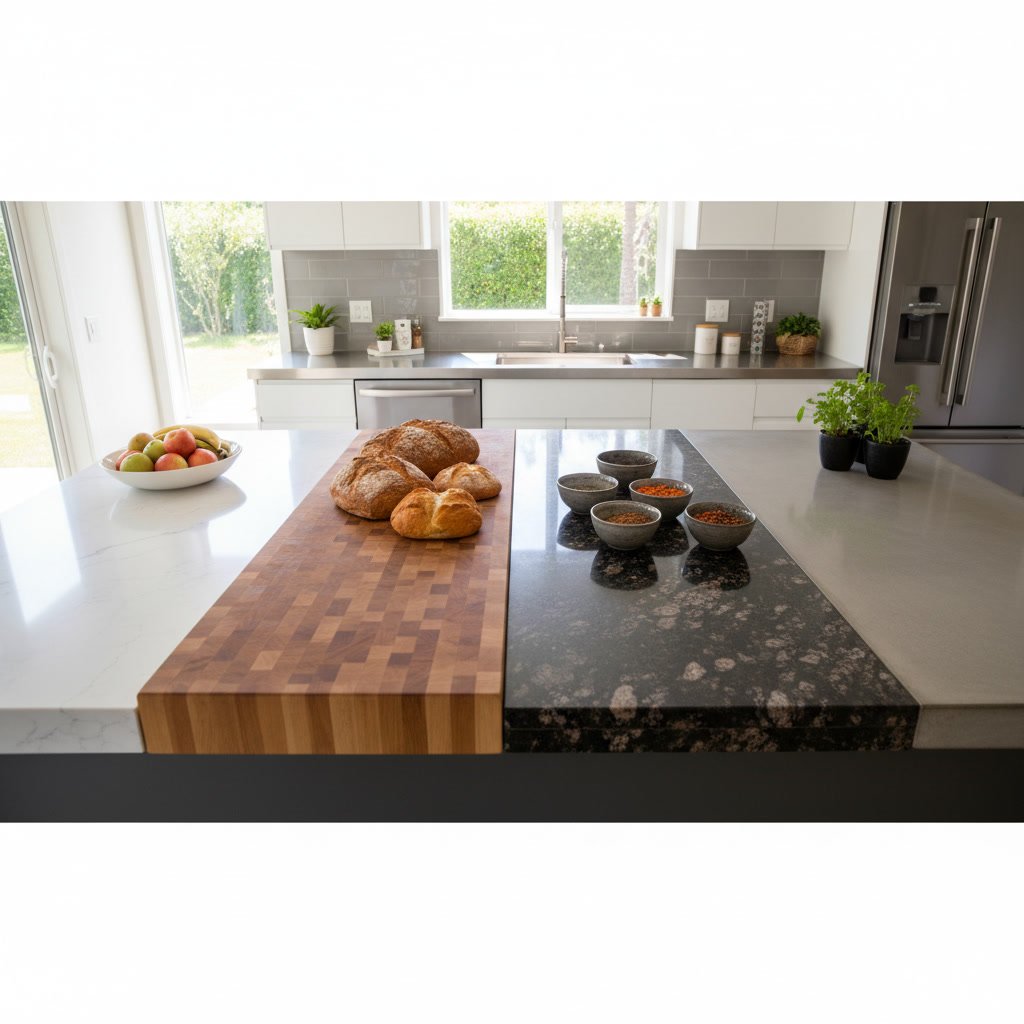
Color selection within each material category dramatically affects the final look. White and light gray quartz brightens small kitchens and pairs well with most cabinet colors. Dark granite adds drama and hides minor stains better than light tones. Mixed materials, such as marble on an island with quartz on perimeter counters, create visual interest while balancing performance needs across different work zones.
Families planning major renovations should consider how countertop choices integrate with other surface decisions. Coordinating countertops with flooring materials and bathroom vanities creates cohesive flow throughout your home. Even small details like whether you match or contrast with cabinet hardware influence the overall impact.
Making the Right Choice for Your Kitchen
The best countertop material balances your cooking habits, maintenance tolerance, aesthetic preferences, and budget. No single option works for everyone. Quartz offers the best all-around performance for most households, while granite provides natural beauty at competitive pricing. Marble rewards those willing to maintain it, and laminate delivers style on tight budgets.
Visit showrooms to see full slabs rather than small samples. Lighting dramatically affects how materials appear, and viewing large sections reveals pattern variations that samples cannot show. Ask about remnant pieces if your project includes small areas like islands or wet bars, as these can reduce costs significantly.
CT Home Remodeling LLC has guided homeowners through countertop selection for over 17 years, helping match materials to lifestyles across Central and Eastern Connecticut. Understanding the performance characteristics of each option prevents costly mistakes and ensures your new kitchen serves you well for decades. Whether your priorities lean toward low maintenance, heat resistance, or visual impact, the right material exists for your specific needs.
Ready to select the perfect countertop for your kitchen project? CT Home Remodeling LLC brings professional expertise to every installation, from material selection through final fabrication. Our team serves homeowners throughout Connecticut with detailed guidance and quality craftsmanship. Call 860-532-7156 to discuss your project and schedule a consultation.