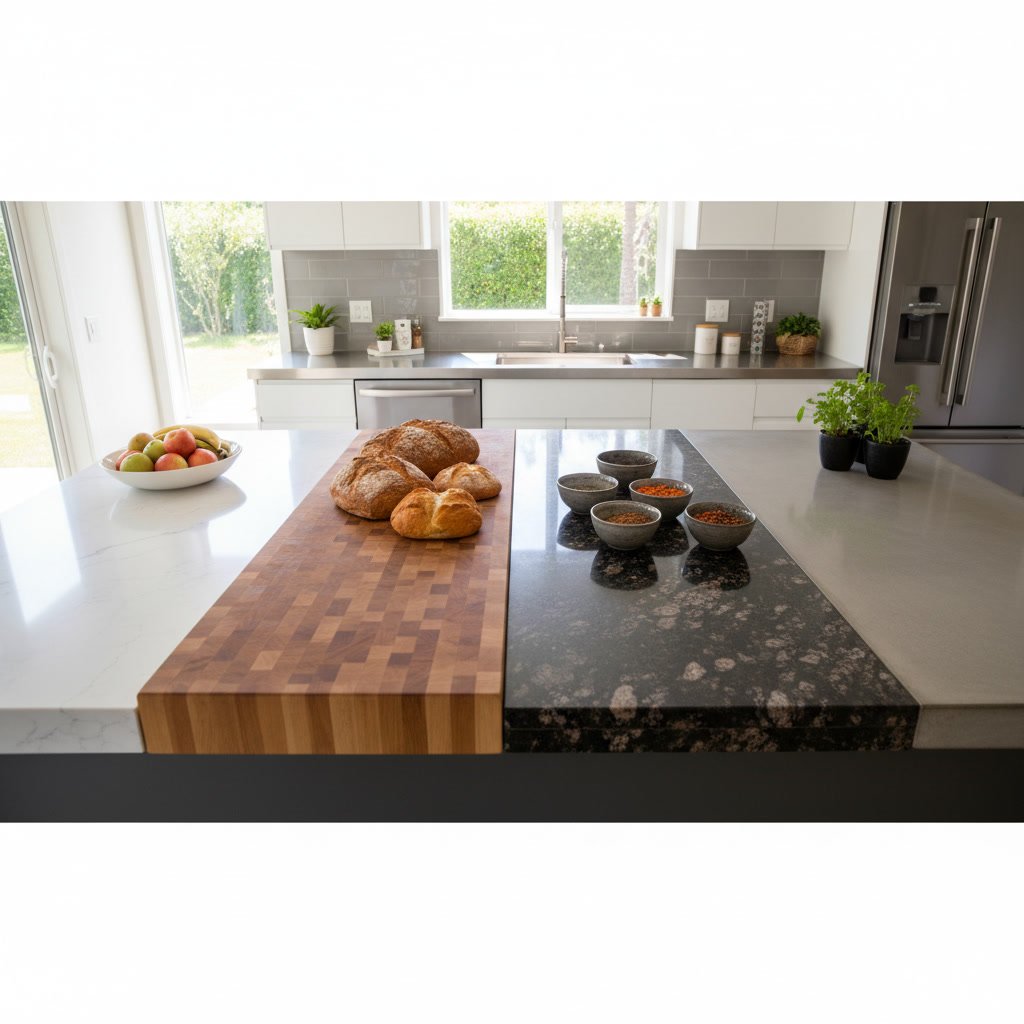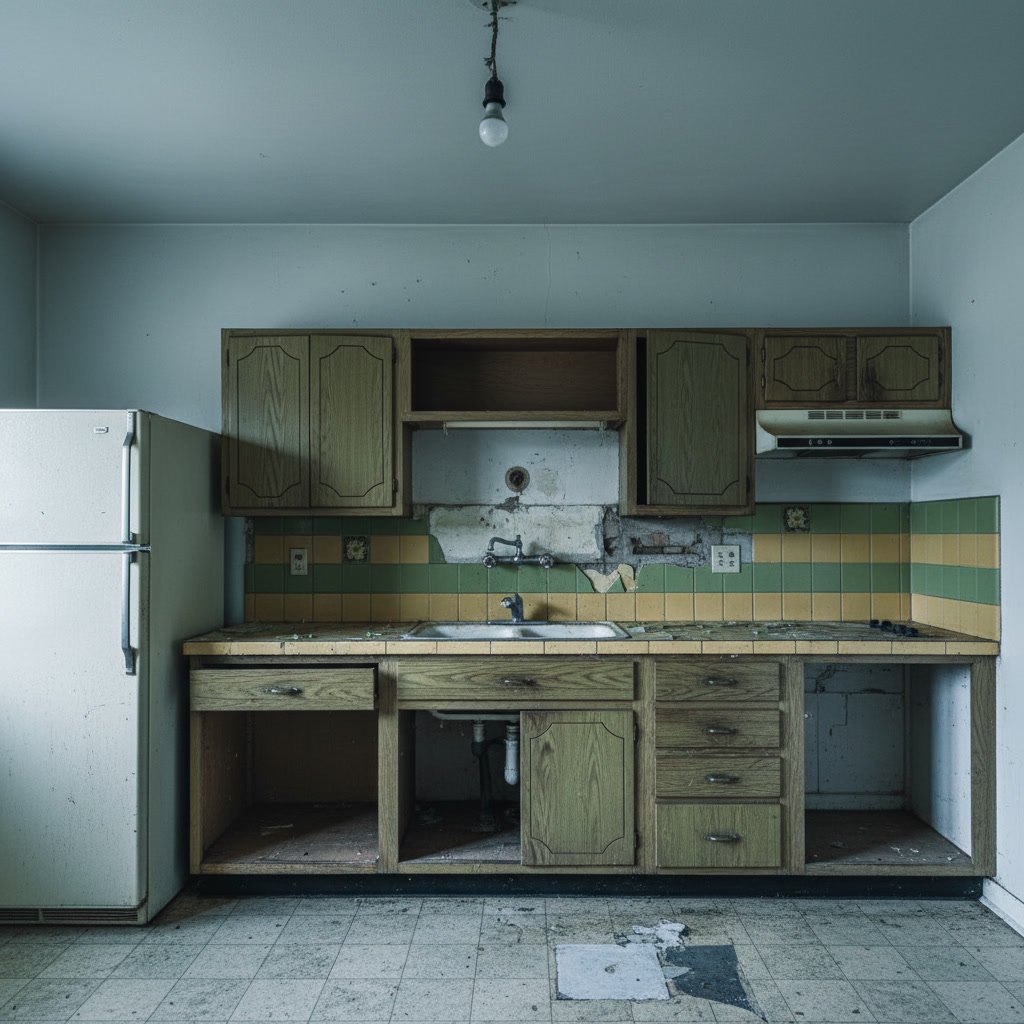
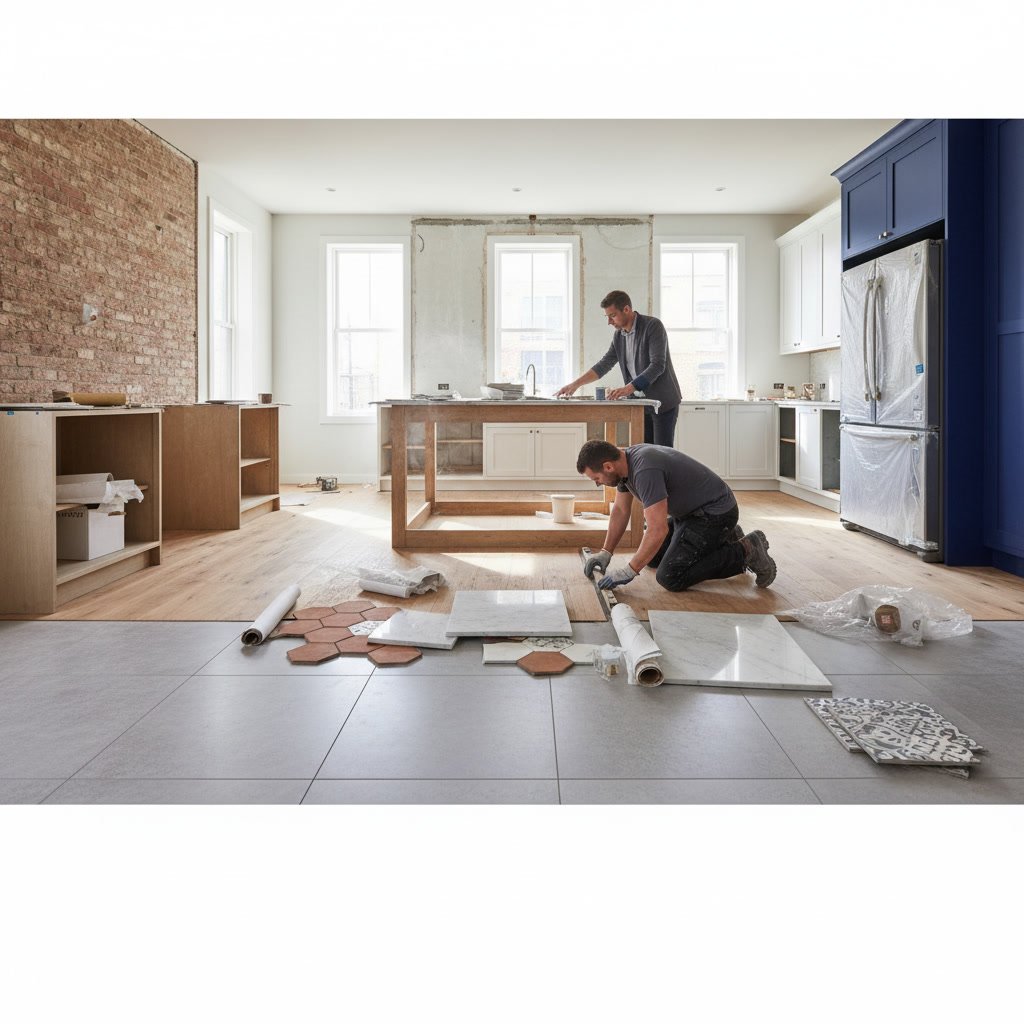
The key to selecting the right kitchen floor is matching material performance to your daily use, then aligning that choice with your design vision and budget. To choose kitchen flooring that lasts, prioritize water resistance, ease of cleaning, and durability in high-traffic areas. The floor anchors the entire room visually, so it must complement your cabinets, countertops, and lighting while standing up to spills, scratches, and constant foot traffic.
Why Kitchen Flooring Deserves Extra Attention in Your Remodel
Your kitchen floor endures more wear than any other surface in your home. It absorbs impact from dropped cookware, tolerates moisture from spills and dishwasher leaks, and supports hours of standing during meal preparation. A poor flooring choice can fail within a few years, forcing costly repairs that disrupt your daily routine.
Beyond function, your floor sets the tone for the entire space. Light flooring can make a compact kitchen feel larger, while darker tones add warmth and hide dirt in busy households. The texture, pattern, and finish you select influence how the room feels underfoot and how it photographs when you eventually sell your home.
Understanding Your Kitchen’s Performance Requirements
Before comparing materials, assess how your household uses the kitchen. Homes with young children or pets need scratch-resistant surfaces that forgive rough treatment. If you cook daily, oil and food stains become a consideration. Households with mobility concerns should avoid glossy finishes that become slippery when wet.
Moisture exposure varies by layout. Kitchens near exterior doors or adjacent to mudrooms see more water tracked in from outside. Open-plan designs with direct sightlines to living areas demand flooring that flows visually into adjacent rooms. Radiant heating systems require materials that conduct heat efficiently without warping.
Hardwood Flooring Brings Timeless Appeal with Trade-Offs
Solid hardwood offers unmatched warmth and refinement. Oak, maple, and hickory develop character as they age, and surface scratches can be sanded and refinished multiple times over decades. However, hardwood absorbs moisture, which causes planks to swell and cup near sinks and dishwashers. Engineered hardwood with a waterproof core performs better in kitchens, though it offers fewer refinishing cycles.
Finish selection matters as much as wood species. Matte and satin finishes hide minor scratches better than high-gloss coatings. Prefinished hardwood installs faster than site-finished, but site-finished floors create seamless visual flow without beveled edges between planks. Budget 8 to 15 dollars per square foot for materials, plus installation.
Luxury Vinyl Plank Delivers Performance at Multiple Price Points
Luxury vinyl plank has become the default choice for homeowners who want the look of wood without maintenance headaches. Modern LVP resists water completely, installs over most existing subfloors, and costs 3 to 8 dollars per square foot. The wear layer thickness determines longevity. A 12-mil wear layer handles light residential use, while 20-mil or thicker construction suits high-traffic kitchens.
Visual quality varies widely. Entry-level products show repeating patterns that reveal the synthetic nature of the material. Premium lines use high-definition printing and embossing that replicates wood grain texture so accurately that most visitors cannot distinguish it from real hardwood at a glance. Rigid core LVP resists denting from dropped objects better than flexible vinyl.
Porcelain and Ceramic Tile Offer Endless Design Flexibility
Tile provides the widest range of styles, from classic subway patterns to wood-look planks and large-format slabs. Porcelain rates harder than ceramic, making it more scratch-resistant and suitable for heavy appliances. Glazed surfaces resist staining, but grout lines require sealing to prevent discoloration from spills.
Large-format tiles reduce grout lines, creating a cleaner modern look and simplifying maintenance. However, larger tiles demand flatter subfloors to prevent lippage, the condition where adjacent tile edges do not align perfectly. Rectified edges allow tighter grout joints for a more seamless appearance. Factor 5 to 18 dollars per square foot depending on tile quality and installation complexity.
Natural Stone Adds Luxury but Demands Maintenance
Marble, slate, travertine, and limestone bring organic beauty that synthetic materials cannot replicate. Each stone type behaves differently. Marble etches when acidic liquids like lemon juice or wine sit on the surface. Slate offers excellent slip resistance but shows water spots unless sealed regularly. Travertine requires filling during installation to smooth its naturally pitted surface.
Stone flooring feels cold underfoot unless paired with radiant heating. It also amplifies sound, making busy kitchens noisier. Professional sealing every one to three years protects the investment, and some stones develop a patina over time that enhances their character. Expect to spend 10 to 30 dollars per square foot installed.
Comparing Flooring Options for Middlesex County Homes
Connecticut’s climate creates specific flooring challenges. Winter heating dries indoor air, causing natural materials to contract, while summer humidity makes them expand. Kitchen remodels in the region benefit from materials engineered to handle these seasonal swings without gapping or warping.
Homes built before 1970 often have subfloor irregularities that show through thin flooring. Thicker materials or self-leveling underlayment correct these issues. Historic properties may have beautiful original wood floors in adjacent rooms that you want to match or complement. Bringing samples home to view under your actual lighting prevents costly mismatches.
Coordinating Flooring with Cabinets and Countertops
Your floor should contrast enough with cabinets to define each element but harmonize in undertone. Warm gray cabinets pair well with flooring that has subtle taupe or greige tones. Pure white cabinets allow bolder floor choices, from rich walnut to dramatic black tile. Avoid matching wood tones exactly between floors and cabinets, as this creates a flat, monotonous look.
When you review the kitchen remodel process from design to completion, flooring decisions typically happen after cabinetry and countertops are selected. This sequence lets you see how materials layer together. Bring cabinet door samples and countertop chips when shopping for flooring to ensure cohesion.
Installation Methods That Affect Long-Term Performance
Floating floors, which click together without glue or nails, allow for expansion and contraction. They install quickly and can be removed if needed. Glue-down installations create a permanent bond that prevents hollow sounds when walking but require perfect subfloor preparation. Nail-down methods work only for solid wood over wooden subfloors.
Transitions between rooms require planning. T-moldings bridge height differences between materials. Flush transitions look cleaner but demand precise height matching during installation. Underlayment choice affects sound transmission, warmth, and moisture protection. Cork and rubber underlayments reduce noise in two-story homes where the kitchen sits below bedrooms.
Budget-Smart Decisions That Do Not Sacrifice Quality
Allocate 10 to 15 percent of your total kitchen budget to flooring, including materials, underlayment, and labor. Choosing a moderately priced material and investing in expert installation often outperforms selecting premium materials and attempting DIY installation. Poor installation voids most manufacturer warranties.
One genuine expert insight: instead of covering your entire kitchen in expensive natural stone, use it as a focal point in the cooking zone and transition to high-quality LVP in less visible areas. This creates visual impact where guests focus their attention while keeping costs reasonable. The transition should occur at natural breaks like doorways or beneath islands.
Timing your purchase matters. Flooring retailers often discount overstocked items by 30 to 50 percent. If your flooring installation timeline is flexible, you can source premium materials at mid-range prices. Order 10 percent extra to account for cuts, future repairs, and pattern matching.
Making a Choice That Serves You for Decades
The right kitchen floor balances your performance needs, aesthetic preferences, and budget constraints without compromising on any single factor. Prioritize water resistance and durability first, then narrow your options based on the look that complements your overall design direction. Quality installation protects your material investment and prevents premature failure.
Your flooring choice should feel confident, not rushed. Visit showrooms, request large samples, and live with them in your space for several days under different lighting conditions. Consult your remodeling team about subfloor condition and installation requirements before making a final decision.
CT Home Remodeling LLC brings over 17 years of experience guiding homeowners through every aspect of kitchen remodeling, from layout planning to material selection. If you are ready to explore flooring options that align with your vision and budget, reach out to discuss your project at 860-532-7156.